
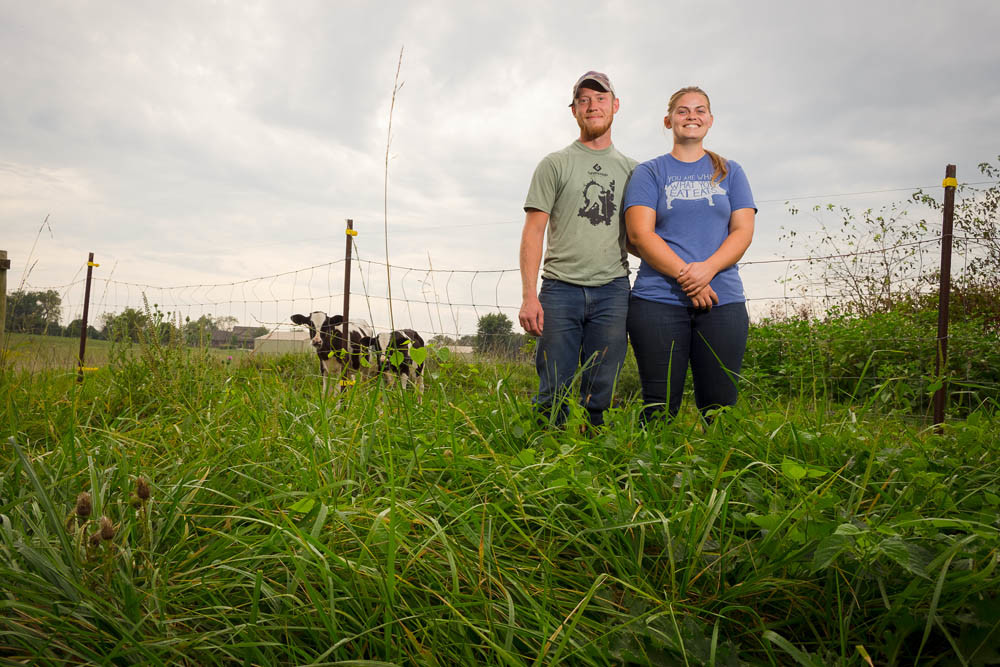
A key to why agriculture is important to business and society is its output — from producing raw materials to contributing to the global supply chain and economic development.
Providing Raw Materials
Raw materials are a core building block of the global economy. Many raw materials derive from agriculture — from lumber for construction materials to herbs for adding flavours to food. Corn, for example, is used to produce foods and serves as a foundation for ethanol, a type of fuel. Another example is resins: plant products used in various industrial applications, such as adhesives, coatings, and paints used in construction.
Creating a Strong Supply Chain
Importing and exporting goods such as agricultural products require shipping methods such as ocean freight, rail, and trucking. However, delays in shipping crops could also be detrimental to regions expecting shipment, limiting availability of products on store shelves and affecting livelihoods.
Encouraging Economic Development
Countries with strong agricultural sectors experience employment growth in other sectors. Countries with agricultural productivity growth and robust agriculture infrastructure also have higher per capita incomes, since producers in these countries innovate through technology and farm management practices to boost agricultural productivity and profitability.
Though farming does not require you to go into debt. It is another expense that can be very harmful to your long-term business venture.
Looking at the totals on your credit card bill, you might wonder, how did I get in this situation? If you intended to only use your card for emergencies but ended up using it for life’s little extras, does that make you irresponsible, immature, or reckless? Behavioural economics says it just makes you human.
We think more about the present and less about the future, and so we’re more likely to take on debt, because we don’t put enough weight in our decision-making process on the future paybacks.”
In other words, although in theory you’d like to take care of yourself in the future, when it comes to how you live your life, Now You matters more than Later You. So, it’s tempting for Now You to buy stuff and force Later You to pick up the tab.
Of course, the problem is that we all become Later You, to whom the bills get sent. We should pay those bills now … but first, why not have a night out with friends? Even Later You will surely start to pay more than the minimum payment any day now.
We’re getting into debt just a little bit at a time. We might use our credit card to buy pizza or coffee or sneakers, these small purchases that eventually add up to huge amounts of debt when we use our credit cards to finance them. We would never go into a bank and take a loan for $20,000 to buy pizza and coffee and sneakers, but it turns out that’s exactly what ‘s happened through this little-bit-at-a-time borrowing through credit cards. When it happens a little bit at a time, you really don’t understand what you’re getting into until it’s too late.
If we lived in a bartering system, we would have a clearer sense of the cost of our purchases. We’d know full well that a pound of pork costs us five ears of corn. But what is the cost of those $100 jeans, really? If you put them on your credit card, do you have any idea what you’ll end up paying? If you carried on wearing last year’s jeans and invested the money, do you know what difference it would make in your retirement account? Not likely.
Money is really about opportunity cost. Every time you buy coffee, the money comes from something else. What is this something else? We don’t envision it. With money, the trade-offs are really unclear.
When something’s overly complicated and we don’t understand it, we might overestimate or underestimate the cost of the product or the loan. Lenders will particularly manipulate or use this complexity to their advantage. They would hide the cost of the loan in the complexity. Hidden costs might include a pre-payment penalty or an interest rate that jumps to a higher amount if you miss a payment.
Between the availability of easy loans and the increased sophistication of marketing, the world is getting increasingly difficult to navigate without falling into the trap of debt.
The temptation to buy everything is higher and higher, and you don’t see the downside.
So how can we arm ourselves better to stay out of debt or get out of debt, since nature hasn’t outfitted us with the mental armour we need?
There’s no magical solution. There’s no question that it’s painful to get out of debt.
First, make things more concrete. Some people find it helpful to separate their money—literally maintaining two bank accounts, one for discretionary spending and the other for fixed expenses. Be sure to include expenses that you might procrastinate on, such as tuition that’s not due until the fall. I suggest you start adding up all the expenses you know about for the year, dividing that number by 12 months, and keeping that amount in a separate account, using rational thinking to set yourself up to resist temptation when it arises.
Some people just say, ‘I don’t want to have a credit card at all,’” he says. “I think part of the rationale of that is: ‘I’m going to avoid temptation.’
Though if you do not use credit cards or go into debt, how are you going to start a new business in agriculture that will resolve the present-day challenges.
These three challenges – feeding a growing population, providing a livelihood for farmers, and protecting the environment – must be tackled together if we are to make sustainable progress in any of them. But making progress on this “triple challenge” is difficult, as initiatives in one domain can have unintended consequences in another.
Sometimes, the consequences are positive. For instance, raising farm productivity can generate income growth in agriculture, make more food available for consumers at lower prices, and – in some cases – reduce pressure on the environment. But sometimes the consequences are negative and require balancing trade-offs. For example, policies to increase the environmental sustainability of agriculture could impose increased costs on farmers and lead to higher prices for consumers.
In other words, policies that address one part of the triple challenge often end up creating synergies (positive effects) or trade-offs (negative effects) with respect to other objectives—and a single-issue perspective on any objective can lead to unintended impacts on other objectives. Competing objectives and complex interactions, along with multiple stakeholders with a range of concerns, should make us cautious when specific ideas are proposed as “silver bullets” to fix the food system.
So, what can policy makers do to address these important challenges, taking into account their interconnectedness? How should they find out if and when there is a conflict between two or more objectives? How should they deal with stakeholders who may resist an initiative they fear could harm their interests? And how should they co-ordinate with policy makers in other agencies or ministries, and with counterparts in other countries?
To begin the process of answering these difficult questions, the OECD organised a Global Forum on Agriculture in May 2019 to exchange ideas about the most important challenges facing the global food system today (the triple challenge), and the obstacles that stand in the way of overcoming them. Importantly, the conversation included views from a range of stakeholders affected by agro-food policy decisions – including farmers, traders, food manufacturers, consumer representatives, agricultural input suppliers, researchers, environmental NGOs, and policy makers.
So, there are many, I mean many factors that affect your future in the agriculture business, and it is safer to start off small. Minimizing what you need to buy and how much each item costs will help you meet this goal. Get by on as little start-up capital as possible. (Sometimes it’s the small expenses that make or break a great idea).
3 Questions You Need to Consider
Taking on any kind of debt requires careful thought. As you think about how much capital you need to fuel expansion, consider these four questions:
1. What is the expected ROI for the loan?
In some cases, the answer is straightforward. Your supplier offers a 30 percent discount on $50,000 in inventory. That’s a savings of $15,000. Even figuring in the interest cost and any fees on the loan, that’s a healthy ROI. Similarly, ROI can be strong if you’re investing in equipment that will immediately boost productivity and sales. Determining ROI isn’t always simple, however. It’s tempting to think that doubling the number of restaurant tables will increase sales by 100 percent. Or hiring a new manicurist will allow you to book 12 new appointments a day. But as every small business owner knows, very few things go exactly as planned. Customers may not materialize; you’ll need extra employees, and the cost of supplies will jump. When calculating the ROI for the loan amount, estimate low and add in a cushion for unexpected expenses.
2. Do the numbers add up?
You’ve built your business by committing your heart and soul to its success. But when it comes to borrowing for expansion, you need to focus on hard data, looking closely at positives and negatives. Positives include revenue and cash on hand, while negatives might include an already-high level of debt and slow sales during certain periods. Any imbalance can indicate that you need to take a closer look at your business model or operations. Before you consider a loan, be sure your business fundamentals are sound. You want the capital infusion to strengthen your business, not just keep it afloat.
3. Do you have a game plan for continued growth?
Even short-term capital should be part of a long-term plan. In the short term, you may be planning to use capital to add a new line of products or services or expand to a new location. You could be investing in technology to rev up online sales. You might be adding staff or expanding marketing. All of these actions should have a singular goal — understanding and anticipating customer needs. Since there’s no business without customers, you need to have a strategy for one, three or five years to keep them coming in the door (or to your website).
So you can take on debt and borrow, but just make sure you understand the consequences and do not borrow just to buy pizza and coffee and sneakers.