
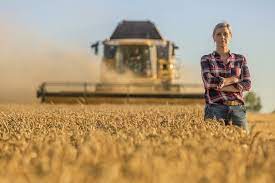
The agricultural and rural sectors face a number of inter-related social and economic stressors including depopulation of rural areas, declining participation in agricultural education, low levels of entry into farming as an occupation (particularly by young women), low incomes and poor rates of return for the majority of farm businesses, and comparatively poor health outcomes for farmers and other rural residents including mental health and suicide. A large proportion of Australian farm businesses do not generate sufficient returns to meet both personal needs and business growth. In considering the future of agriculture, this raises at least two questions.
- First, will social and economic stressors undermine the human capital base of Australian agriculture, its productivity and viability?
- Second, will these stressors undermine the social license of agriculture or the sincerity of Australian agriculture moving ahead with the times.
One way of moving forward is to achieve gender equality and it is important for future workplaces not only because it is ‘fair’ and ‘The right thing to do,’ but because it is also linked to a country’s overall economic performance. Workplace gender equality is associated with:
- Improved national productivity and economic growth
- Increased organisational performance
- Enhanced ability of companies to attract talent and retain employees
Advancing gender equality leads to countless benefits for women, men and gender diverse communities. Here are some of the ways that you could create a better world, for all of us.
You should focus on fairness, equality and justice which are the foundation of human rights. The idea that gender equality is first and foremost the right thing to do has inspired and galvanized advocates around the world.
Businesses with gender equality policies and strategies that include family friendly workplace policies and that address sex-based harassment and discrimination against employees are reducing the risk of workplace discrimination cases, which can potentially be damaging for a company’s reputation.
High performing employees are attracted to companies that have a positive reputation for promoting gender equality
With aims to accelerate men’s uptake of caring roles, businesses are increasingly integrating efforts to engage men into existing gender-equality goals. A business can, for example, reinforce gender equality and women’s leadership in its workplace, consider women consumers in product design, support women farmers who produce raw materials in its supply chain, and tackle outdated gender stereotypes in its advertising.
Gender equality is not only the right thing to do – it’s also the smart thing to do. Now more than ever, as we see the impacts of the COVID-19 pandemic on women and gender diverse communities, who during this unprecedented time are more likely to experience unemployment and economic hardship, are more susceptible to poverty and food insecurity, and are at an increased risk of experiencing gender-based violence. Advancing gender equality will help create a thriving, prosperous country for everyone, in our community.
By increasing women’s participation in the workforce, you have a positive impact your communities soul and its feeling of empowerment.
A diverse and inclusive workforce generates tangible benefits, such as increased efficiency, productivity, innovation, creativity and improved employee engagement. A diverse workforce tends to produce a more holistic analysis of the issues your new business faces and spurs greater effort and motivation, leading to improved decision-making.
Equality is the foundation from which everyone can all lead healthy, happy and fulfilling lives. When you reduce or even eliminate discrimination and harmful stereotypes to preventing gender-based violence, advancing gender equality contributes to a higher quality of life for everyone.
When your workplace is equally appealing to women and men, your new business understandably will have access to a larger talent pool. Employees value positive workplace cultures and environments that offer gender equality policies and practices, flexible working arrangements and support for employees with family.
Around half of all farming families were couple families with children. This compares with 45% of all families in Australia. The category contributing most of the difference between these two groups was the greater proportion of farming families where the youngest child was under 15 years of age.
1.2 FAMILY TYPES
| Farming families (a) | All families | ||||
| Family Type | No. | % | No. | % | |
| Couple family with children | 51 907 | 50.6 | 2 362 588 | 45.3 | |
| Youngest child aged under 15 years | 35 540 | 34.6 | 1 627 165 | 31.2 | |
| Youngest child aged 15 years or over | 16 367 | 15.9 | 735 423 | 14.1 | |
| Couple family without children (b) | 46 698 | 45.5 | 1 943 648 | 37.2 | |
| Male partner aged under 35 years | 3 605 | 3.5 | 358 106 | 6.9 | |
| Male partner aged 55 years or over | 31 307 | 30.5 | 1 130 967 | 21.7 | |
| One-parent family | 3 221 | 3.1 | 823 254 | 15.8 | |
| Youngest child aged under 15 years | 1 180 | 1.1 | 455 668 | 8.7 | |
| Youngest child aged 15 years or over | 2 041 | 2.0 | 367 586 | 7.0 | |
| Total (c) | 102 616 | 100 | 5 219 165 | 100 | |
| (a) Reference person and/or spouse reported their occupation as farmer/farm manager. | |||||
| (b) Includes couple families without children, not specified. For example, couples who have a child living away from home at boarding school. | |||||
| (c) Includes other family types. | |||||
| Source: ABS 2006 Census of Population and Housing. |
Engaging men as allies is by no means a panacea to achieving gender equality. Men must build on women’s efforts and organizations, not replace them; they must find and act on their own motivations for achieving gender equality. But effectively engaging men as part of broader, intersectional approaches to creating more inclusive workplaces gives businesses the opportunity to tackle entrenched power relations and create long-term, systemic change. Men and women working together for gender equality will ultimately bring benefits to all genders, to all business, and to society as a whole. Flexible working arrangements enable employees to meet their family as well as their personal needs and evidence suggests that all employees including the young, the senior, and employees with family responsibilities are all more likely to be engaged and motivated in workplaces with access to flexible working arrangements.
By implementing flexible working conditions in your new business, it can be a critical factor in attracting top talent in all industries.
Gender equality has the power to create a more peaceful world. Involving women and gender diverse communities in the decision-making process, from peace operations to responses to climate change, helps achieve long-term, sustainable peace.
Your new business policies that support gender equality are an important tool to retain talented employees. Studies have shown that employees are more likely to remain with an business in which there is a proactive diversity ‘climate’ as they perceive a concrete payoff to themselves by staying in an organisation they view as fair. The main incentives that help drive employee retention are workplace flexibility, breastfeeding facilities, return to work programs and parental and carers leave provisions. Employees are more likely to be engaged and motivated in workplaces with access to flexible working arrangements.
Everyone deserves the opportunity to reach their full potential, and gender equality helps create a world without limits. When steps are taken to advance gender equality, barriers are removed to create a world of infinite possibilities.
When your new business encourages a diverse team, it is associated with greater innovative capacity for an organisation. International research examining gender diverse teams suggests that more gender-balanced teams are better in promoting an environment where innovation can flourish compared to teams of one particular gender.
For genuine impact, it’s important that your new business complement actions that support individual shifts in attitudes with broader, organizational commitments that enable equality and inclusion to thrive. Doing this well requires you as your business leader clearly articulate how gender equality is core to the organization’s overall strategy and future direction, and actively support efforts on strategic, cultural, and policy levels.
One factor is that well managed diversity brings together varied perspectives, produces a more holistic analysis of the company issues and spurs greater effort, leading to improved decision-making.
To make the leap to regenerative agriculture, farmers need evidence that this approach will work and models for what transitioning actually looks like in their own region. In a recent survey, 70% of farmers interviewed will try a new technology or practice once they’ve seen “a number” or “most” of their peers try it successfully.
So, how does that domino effect get started?
Conventional agriculture benefits from the existing cooperative extension model, which has been partnering with land grant universities for more than 100 years to provide training and support to farmers, driving a feedback loop of conventional crops and dominant metrics of yield. Rather than the current one-size-fits-all approach designed to drive yields for commodity farmers across vastly different landscapes and climates, this type of regenerative farming instead demands regionally specific knowledge that is grounded in the nuance of particular crops grown within local climates and soils.
So many independent organizations are attempting to build a parallel system. A network of associations and non-profits around the country are providing resources to farmers to demonstrate how regenerative farming works, provide training in specific regenerative practices like cover cropping and intercropping, and building networks of neighbour’s and peers to provide support. Many describe this as moving from input intensive (conventional agriculture) towards knowledge intensive (regenerative agriculture).
Regenerative agriculture “farming with nature,” is slowly increasing and we see farmers become energized from adding in a bit more biological diversity to the dominant ag production system. This works to build resilient farms and communities by hosting programs and field days, conducting on-farm research and answer farmers questions, and building a peer-to-peer network of farmers exchanging knowledge and experience. Recent information shows over 70% of farmers report improving their on-farm stewardship practices and 75% report increasing their investment in conservation practices. This network provides role models who can show other farmers that it can actually be done. The connection to others seems to be a really good leverage point, to get these practices off the ground.
Repeatedly, farmers discussed the social dynamics of farming with as much consideration as economics or mechanics. The concept of “farming over the fence” refers to your neighbours checking out your fields to see how many weeds you have, how tall your crop is, etc. In small, rural towns, the local coffee shop gossip might be Farmer Joe’s new cover crop and how “weedy” it looks from the road. But once they find out the higher prices Farmer Joe receives from customers who like his inclusiveness of new farming methods, then others will follow.
So increasing gender equality in the agriculture industry does have many benefits and one way to encourage the masses is for you to start implementing such policies in your new business and others will follow.